Posts

Showing posts with the label yechezkel

Tanach: The Beginner's Guide to Being a Prophet

A couple of days ago I read a great essay by Yairah Amit . Amit argued that the story of Shmuel's becoming a prophet as described in Shmuel 1:3:1-21  reflects matters of interest and comes to answer subjects that were debated in the circles of the prophets of Yisrael. In short: Prophets were rare in the time of the judges. People generally turned to the kohanim (priests) for guidance. The story is designed in a way that shows the divine providence leaving the kohanim and passing over to the prophets. Prophecy was individualistic, i.e., only the prophet could hear Hashem talking to him. In another essay I saw today by Chaim Gevaryahu, he argued (based on similar prior suggestions) that most prophets of the early days made a living off of donations from people who came to them, or they wandered from town to town and city to city collecting donations. This can be seen in several instances in Tanach, including by Eliyahu, Elisha, Shmuel, Achiyah Hashiloni and more. Now, about a year ag...
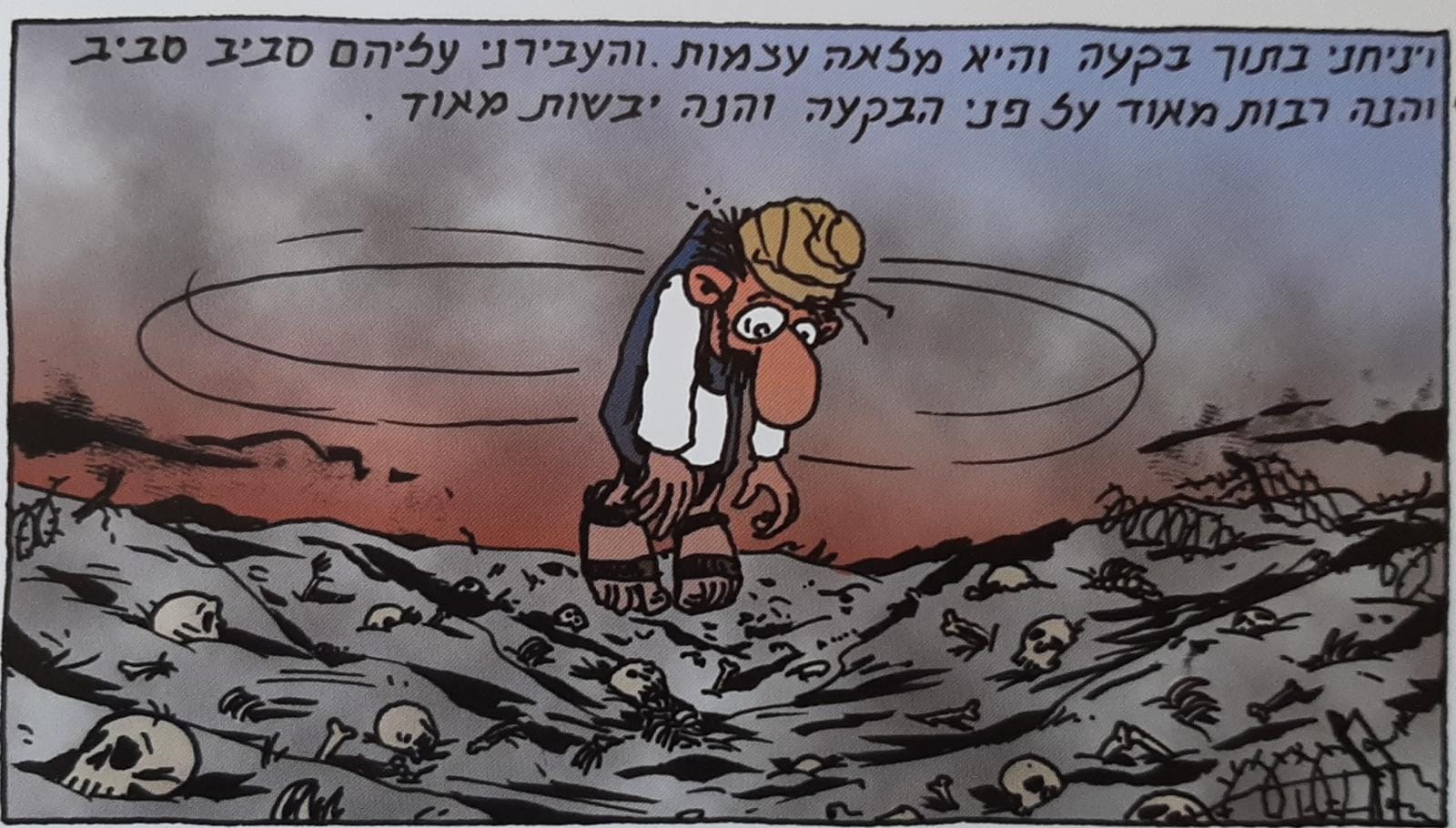
Yimiyahu and Yechezkel: Thoughts

Since finishing Yechezkel a few days ago, I've found myself thinking a bit about the contrast between him and Yirmiyahu. Both were priests, but boy did they live different lives.  Yirmiyahu does not want to be a prophet. In fact, prophecy is essentially forced upon him time and again. There are days in which he bows in acceptance and others in which he buckles. Yirmiyahu is described in the gemara as a prophet who is "entirely destruction". The plain meaning of the phrase is that all of his prophecies have to do with destruction. However, in a deeper sense, there is something destroyed about Yirmiyahu himself. Something fragmented. Yechezkel is different. Though there's mention of Yechezkel being appalled at some of the things Hashem commands him to do, there's not a hint that he was not interested in prophecy. He accepts it willingly. Yechezkel is really the classic prophet. He gravitates to the leadership role thrusted upon him. He is a natural teacher. He is r...

Yechezkel: Coming full circle

Image
Tonight, the 27th of Tammuz, is my birthday. As it happens, my second name is Yechezkel. A short time before my bar-mitzvah, I discovered that the only place in Tanach in which "Harel" appears is the Book of Yechezkel. My parents were not aware of this when they named me. My second name comes from my great-grandfather, but - I suppose we could say it's the hashgacha/providence that is given to parents when they name their children.  Again, as it happens, I have, at long-last, finished learning the Book of Yechezkel. As such, I thought I would write down my thoughts about the book. I will first say that for a little over two years now I've been planning to learn Yechezkel, but haven't gotten around to it. The reason I was particularly interested in Yechezkel was because of a dream I had around the time. I've only had a handful of truly significant dreams in my life. This one, I felt, was one of those. In the dream, I heard one of the most serious people in my y...

People-specific prophecies

Image
(image by Gustave  Doré, taken from here ) It is well known that biblical critics are immensely bothered by the Book of Yesha'ayahu. The reason that they are bothered by it is not  because it's, as they claim, made up of two to fifty (roughly) different books of different prophets, of whom only one is named (Yesha'ayhu I), but really because they deny the very possibility of prophecy. To them, prophets were the ancient world's equivalent of thinkers and political advisors. No spiritual capabilities whatsoever. As long as the prophets gave generalized apocalyptic "prophecies" that could mean anything and may not even come true, the prophets were in the clear. No, what really bothers critics is when prophets got something right . Then the prophet is a goner: He or she will be pushed from their classically-accepted era to the future, a time in which everyone  knew what had transpired, thus removing any real prophetic abilities from them. But what really bothers c...