Posts

Showing posts with the label judea

Ohalivah, Ohalivamah, Yehudah, and Yehudit

Image
Something interesting I noticed today while reading Rashi on Vayishlach. While discussing the wives of Esav, Rashi noted  that the wife called Ohalivamah (אהליבמה) bat Anah ( Beresheet 36:2 ) is the same as Yehudit (יהודית) bat Be'rei ( Beresheet 26:34 ). And that led me to wonder: In the Tanach (e.g. Yechezkel 23:4 ), and in later sources, especially piyyutim lamenting the destruction and exile ( some examples ), Judah is often called "Ohalivah", which is very similar to Ohalivamah, who is supposedly Yehudit (Judith, same root as Judah). It begs the questions: Why would Ohalivah/Judah be called after one of the wives of Esav, and is Ohalah (Israel in the same sources) also named after someone? (image taken from here )

Eulogizing in Tanach

Image
לעילוי נשמת אברהם בן ישראל יצחק Post in memory of Avraham ben Yisrael Yitzchak Last night, my grandmother's brother died. This comes in the wake of the passing of my grandfather less than two years ago and the passing of one of my aunts less than a year ago. All very sudden and health-related, but nothing due to corona. This post is dedicated in his memory. Some time ago, I noticed that there was a typical sort of eulogy or lament in Tanach. It is referred as "הוי אחי" - "Oh, my brother". It's only mentioned twice in Tanach - in Kings and Yirmiyahu, but there's also a sort of - offshoot, I guess? that appears later in Yirmiyahu as well, which is a eulogy that seems to have been reserved for royalty, and that's the "הוי אדון" - "Oh, [my] lord" eulogy. Here are the verses (this translation uses the variants "alas" and "ah" instead of "oh"): "He laid the corpse in his own burial place; and they lame...

Rechav'am's fortifications

Image
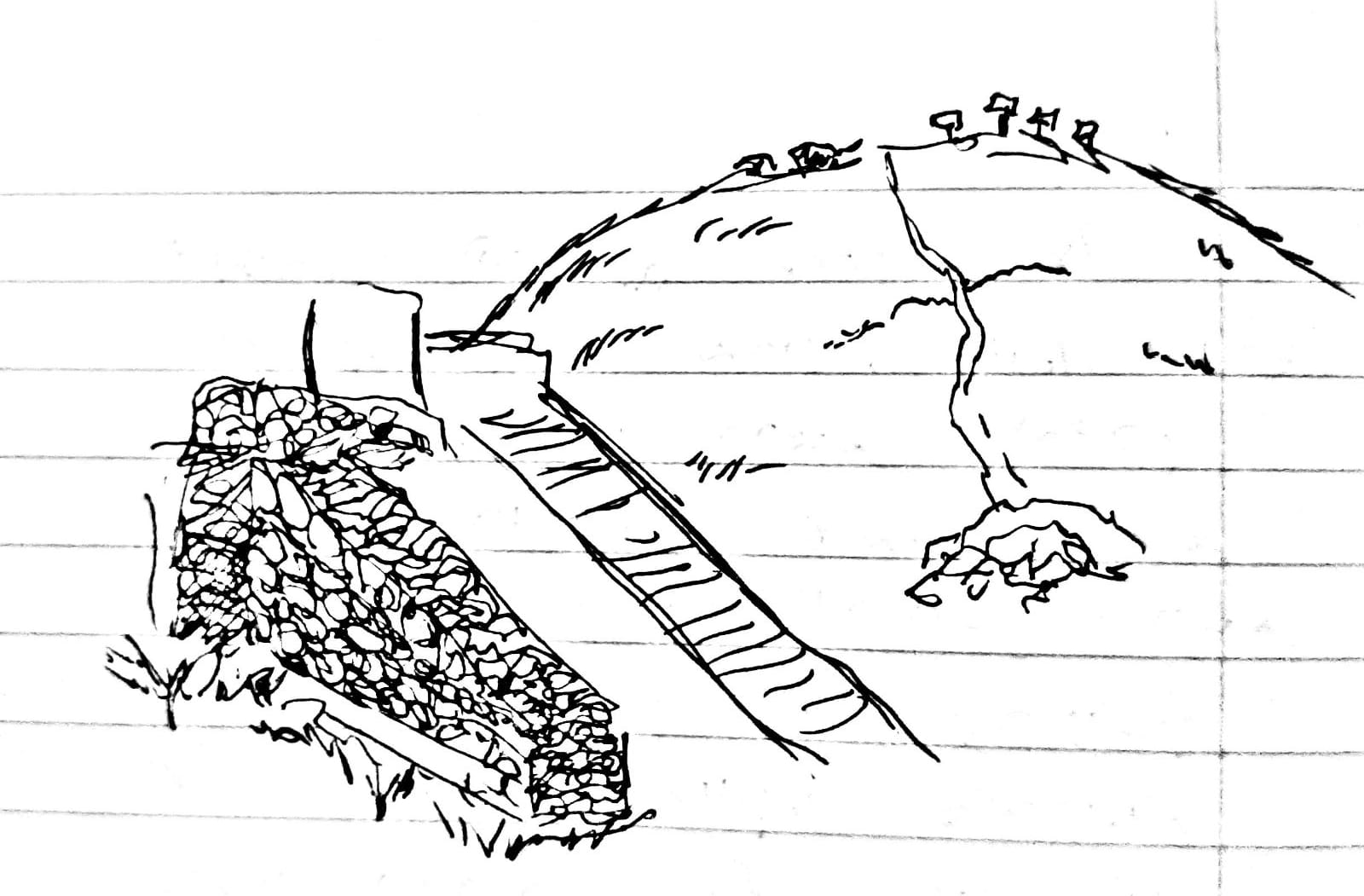
Every Thursday the Bar Ilan archeology department organizes a trip for the students to a historical site here in Israel. We need to complete a certain number of such trips to be able to complete our degree. You don't have to come to every single one, you just have to make sure that at some point you complete the required number. Last Thursday we were supposed to go to Tel Arad, Tel Sheva and Tel Lachish, but due to heavy traffic, our lecturer decided to change the trip to over two hours in Tel Lachish (instead of 15-30 minutes as generally happens on this particular trip) and then we went to Tel Burna, which was cool, because typically archeology students don't go to Tel Burna. It's not one of the most famous and significant sites and has barely been excavated. (my sketch of Tel Lachish at a distance) I wanted to share something cool about Lachish. Lachish is probably most famous for being the most important city captured by Sanchariv during his conquest of Judea (which end...

Yimiyahu and Yechezkel: Thoughts

Since finishing Yechezkel a few days ago, I've found myself thinking a bit about the contrast between him and Yirmiyahu. Both were priests, but boy did they live different lives.  Yirmiyahu does not want to be a prophet. In fact, prophecy is essentially forced upon him time and again. There are days in which he bows in acceptance and others in which he buckles. Yirmiyahu is described in the gemara as a prophet who is "entirely destruction". The plain meaning of the phrase is that all of his prophecies have to do with destruction. However, in a deeper sense, there is something destroyed about Yirmiyahu himself. Something fragmented. Yechezkel is different. Though there's mention of Yechezkel being appalled at some of the things Hashem commands him to do, there's not a hint that he was not interested in prophecy. He accepts it willingly. Yechezkel is really the classic prophet. He gravitates to the leadership role thrusted upon him. He is a natural teacher. He is r...

Parallels between the leadership of Shivat Tzion and the sub-groups that came with them?

 Been awhile. But I thought I would put forward this idea suggested by my (new) Tanach chavruta: We started learning Ezra and Nechemiah Wednesday before last. When we reached ch. 2 he suggested that the list of the leadership of Shivat Tzion - Zerubavel, Yeshua, Nechemiah, S'rayah, Ra'alyah, Mordechai, Bilshan, Mispar, Bigvai, Rechum, Ba'anah - corresponds to the sub-groups that came with them to Eretz Yisrael: Families from Yehudah, Binyamin, Levi, Kohanim and the Bnei Netinim - descendants of the slaves of Shlomo who converted. Very interesting theory, but does it hold water? Zerubavel - Yehudah. Yeshua - Kohen Nechemiah - unknown (whether or not this is Nechemiah Hatirshata, author of Nechemiah is unknown, but either way, his tribal identity is, at least according to p'shat, unknown. S'rayah - unknown, some believe this may be S'rayah Hakohen, last KG of the First Temple. Ra'alyah - unknown. Mordechai - likely the  Mordechai, so Binyamin. Bilshan - unknow...